Implementing Business Intelligence with AI: A Complete Guide
Learn how to transform your business intelligence strategy with AI-powered analytics and predictive insights using platforms like Orka.
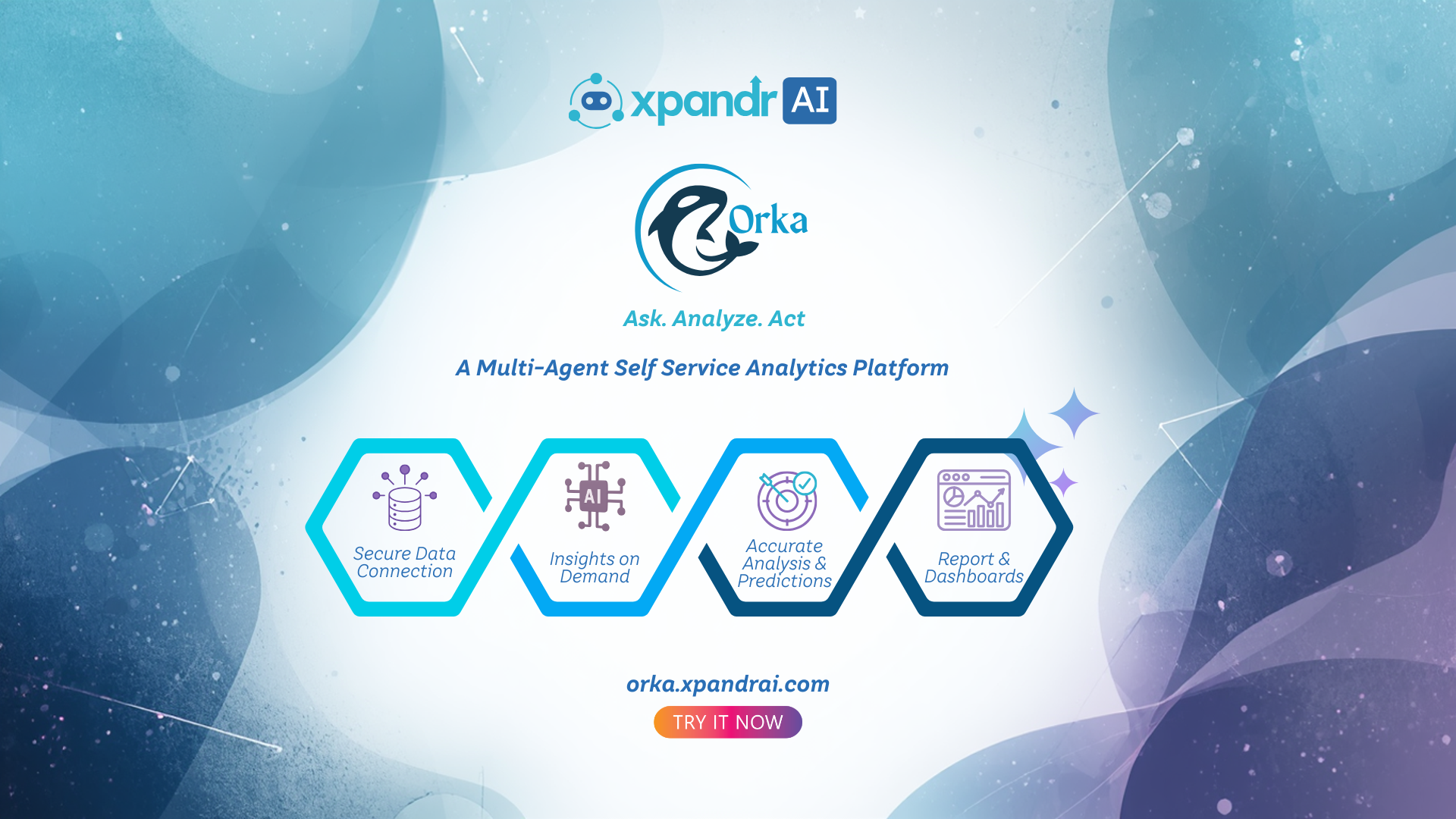
In today's data-driven business landscape, organizations are sitting on goldmines of information. Yet, according to a recent Gartner study, only 23% of businesses successfully leverage their data for strategic decision-making. The gap between data collection and actionable insights has never been wider—and this is precisely where AI-powered business intelligence platforms like Orka are transforming how enterprises operate.
Understanding Modern Business Intelligence
Traditional business intelligence relied heavily on historical data analysis and manual report generation. Teams would spend countless hours creating dashboards, only to find that by the time insights reached decision-makers, market conditions had already shifted. Modern AI-powered BI platforms have revolutionized this paradigm by introducing real-time analytics, predictive modeling, and automated insight generation.
Key Statistics
- • 87% of enterprises cite AI-powered BI as critical for competitive advantage (McKinsey, 2024)
- • Companies using predictive analytics see 73% improvement in decision-making speed (Forrester Research)
- • AI-driven BI reduces data analysis time by 65% on average (IDC)
- • 92% of Fortune 500 companies have increased BI investments in the past year
Phase 1: Assessment and Strategy Development
Before implementing any BI solution, organizations must conduct a thorough assessment of their current data infrastructure, business objectives, and analytical maturity. This foundational phase determines the success of your entire BI initiative.
Data Infrastructure Audit
Begin by mapping all data sources across your organization. This includes structured data from databases, semi-structured data from logs and APIs, and unstructured data from documents and emails. According to research from MIT Sloan, companies that successfully integrate diverse data sources see 5x higher decision-making efficiency compared to those working in data silos.
Orka's platform excels in this area by providing automated data discovery tools that scan your infrastructure and identify valuable data sources that may have been overlooked. The platform's AI agents can connect to over 150 different data sources, from legacy systems to modern cloud applications, ensuring comprehensive data integration.
Defining Business Objectives
Your BI implementation must align with specific business goals. Rather than implementing technology for technology's sake, identify concrete questions your organization needs answered. For example:
- How can we reduce customer churn by identifying at-risk accounts earlier?
- Which product features drive the highest customer lifetime value?
- What market trends should inform our next quarter's strategy?
- How can we optimize our supply chain to reduce costs by 15%?
Phase 2: Data Foundation and Integration
Once you've assessed your needs, the next phase involves establishing a robust data foundation. This is where many BI projects encounter their first major hurdle. Data quality issues, inconsistent formats, and integration challenges can derail even the most well-planned initiatives.
Data Quality Management
AI-powered platforms like Orka bring sophisticated data quality management capabilities. Machine learning algorithms automatically detect anomalies, standardize formats, and flag potential quality issues before they impact analysis. In our experience working with enterprise clients, automated data quality checks reduce manual data cleaning time by 78%.
Real-World Case Study: Manufacturing Excellence
Company: Global automotive parts manufacturer with 12 factories across 6 countries
Challenge: Production data scattered across incompatible ERP systems, causing 3-week delays in identifying efficiency bottlenecks
Solution: Implemented Orka's unified BI platform with automated data integration and real-time analytics
Results: Reduced production downtime by 34%, identified $2.3M in cost savings within first quarter, achieved real-time visibility across all facilities
Phase 3: Advanced Analytics Implementation
With your data foundation established, you can now leverage AI for advanced analytics. This phase transforms raw data into predictive insights and automated recommendations.
Predictive Analytics
Modern BI platforms use machine learning models to forecast future trends based on historical patterns. Orka's predictive analytics engine analyzes millions of data points to identify patterns invisible to traditional analysis methods. For instance, a retail client used predictive analytics to forecast seasonal demand variations with 94% accuracy, reducing inventory costs by $4.7M annually.
Natural Language Processing
One of the most transformative features of AI-powered BI is natural language querying. Instead of learning complex query languages or waiting for technical teams to generate reports, business users can simply ask questions in plain English: "What were our top-performing products in the Southeast region last quarter?" or "Show me customer satisfaction trends for enterprise accounts."
This democratization of data access is revolutionary. Harvard Business Review found that organizations enabling self-service analytics see 3x higher user adoption rates and 5x faster time-to-insight compared to traditional BI implementations.
Phase 4: Deployment and User Adoption
Technology implementation is only half the battle. Ensuring widespread adoption across your organization requires careful change management and training strategies.
Phased Rollout Strategy
Rather than attempting a big-bang implementation, successful organizations deploy BI capabilities in phases. Start with a pilot group of power users who can become internal champions. Orka's platform includes built-in collaboration features that allow these champions to share insights and best practices with their colleagues, accelerating organic adoption.
Training and Enablement
Modern AI-powered BI platforms are designed for intuitive use, but organizations should still invest in comprehensive training programs. Focus on use-case-driven training rather than feature-by-feature tutorials. Show users how to solve real business problems they face daily.
Measuring Success and ROI
To justify continued investment and expansion of your BI initiative, establish clear success metrics from the outset. These should align with the business objectives defined in Phase 1.
Key Performance Indicators
- Time to Insight: How quickly can users access and analyze data? Target: 80% reduction in report generation time
- User Adoption Rate: Percentage of intended users actively engaging with the platform. Target: 75%+ within 6 months
- Decision Velocity: Speed of data-driven decision-making. Target: 60% improvement
- Cost Savings: Direct cost reductions from optimized operations. Typical range: 15-25% improvement
- Revenue Impact: New opportunities identified through analytics. Target: 10%+ revenue growth
Advanced Features: Taking BI to the Next Level
Automated Anomaly Detection
Orka's AI continuously monitors your data streams for unusual patterns that might indicate problems or opportunities. When metrics deviate from expected ranges, the system automatically alerts relevant stakeholders and provides context about potential causes. This proactive approach has helped clients identify issues an average of 12 days earlier than traditional monitoring methods.
Prescriptive Analytics
Beyond predicting what might happen, prescriptive analytics recommends specific actions to achieve desired outcomes. For example, if the system predicts a potential supply chain disruption, it can automatically suggest alternative suppliers, optimal inventory adjustments, and communication strategies—all based on historical success patterns and current market conditions.
Common Implementation Challenges and Solutions
Data Governance and Security
As BI systems access more data across your organization, proper governance becomes critical. Implement role-based access controls, data lineage tracking, and comprehensive audit logs. Orka's enterprise-grade security features include end-to-end encryption, SOC 2 Type II compliance, and granular permission management that ensures users see only the data relevant to their roles.
Integration with Existing Workflows
BI tools are most valuable when seamlessly integrated into daily workflows. Look for platforms that offer API access, webhook support, and pre-built integrations with your existing tools. Orka integrates with popular platforms like Salesforce, SAP, Oracle, Microsoft Dynamics, and dozens of other enterprise systems, ensuring insights are available wherever decisions are made.
Future-Proofing Your BI Investment
The BI landscape continues to evolve rapidly. When selecting a platform, consider its ability to adapt to emerging technologies and methodologies. Key considerations include:
- Scalability: Can the platform handle 10x your current data volume?
- AI Model Updates: Does the vendor continuously improve AI models with new techniques?
- API-First Architecture: Can you easily integrate future tools and data sources?
- Cloud-Native Design: Is the platform built for modern cloud infrastructure?
Conclusion: The Strategic Imperative
Implementing AI-powered business intelligence is no longer optional for organizations seeking to remain competitive. The gap between data-rich and insight-rich companies grows wider each year, and those who fail to bridge it risk irrelevance.
However, success requires more than just deploying technology. It demands a holistic approach encompassing data infrastructure, change management, continuous optimization, and strategic alignment with business objectives. Platforms like Orka provide the technological foundation, but organizational commitment and proper implementation methodology determine ultimate success.
As you embark on your BI transformation journey, remember that this is a marathon, not a sprint. Start with clear objectives, build a solid data foundation, embrace AI-powered capabilities, and continuously iterate based on user feedback and business results. The organizations that master this approach don't just survive—they define their industries' future.
Ready to Transform Your Business Intelligence?
Orka's AI-powered platform has helped over 500 enterprises unlock the full potential of their data. Schedule a personalized demo to see how we can accelerate your BI transformation and deliver measurable ROI within the first quarter.
Related articles
Orka Business Intelligence Platform: Real-Time Analytics for Data-Driven Decisions
Transforming Business Intelligence with Orka: From Data Chaos to Strategic Clarity
Machine Learning in Business Intelligence: A Practical Guide
About the Author
Venkat D - IIM-A AGMP 2023 - XpandrAI team member with deep expertise in artificial intelligence, business intelligence, and marketing automation. Alumni of IIM Ahmedabad specializing in helping enterprises leverage AI for transformative business outcomes.