Machine Learning in Business Intelligence: A Practical Guide
Learn how machine learning algorithms enhance business intelligence platforms with predictive capabilities and automated insights.
Machine learning is transforming business intelligence from descriptive reporting to predictive and prescriptive analytics. Modern BI platforms leverage ML algorithms to uncover hidden patterns, forecast future trends, and recommend optimal actions—capabilities that would be impossible through traditional analysis methods.
From Reporting to Intelligence
Traditional BI answered "what happened?" Machine learning-enhanced BI answers "what will happen?" and "what should we do about it?" This evolution from hindsight to foresight fundamentally changes how organizations make decisions.
ML in BI Statistics
- • 83% of BI leaders consider ML integration critical for competitive advantage (Gartner)
- • ML-enhanced BI improves forecast accuracy by 30-50% on average (Forrester)
- • Organizations using ML in BI make decisions 5x faster (IDC)
- • 78% of data-driven companies increased revenue through ML analytics (NewVantage Partners)
Key ML Applications in BI
Automated Anomaly Detection
ML algorithms continuously monitor metrics and KPIs, automatically detecting unusual patterns that might indicate problems or opportunities. Unlike rule-based alerts that require manual threshold setting, ML learns normal patterns and flags statistically significant deviations.
Predictive Forecasting
Time series forecasting models predict future metrics based on historical trends, seasonal patterns, and external factors. These models handle complex multi-variate scenarios where many factors interact to influence outcomes.
Natural Language Querying
NLP-powered interfaces allow business users to ask questions in plain English rather than learning query languages. The system translates natural language into SQL queries, executes them, and presents results in appropriate visualizations.
Automated Insight Generation
Rather than requiring users to explore data manually, ML algorithms automatically identify interesting patterns, correlations, and trends. The system surfaces actionable insights proactively.
Implementation Considerations
- Data Quality: ML models require clean, comprehensive data
- Model Interpretability: Ensure business users understand how predictions are made
- Continuous Learning: Implement feedback loops for model improvement
- Change Management: Help users transition from traditional to ML-enhanced analytics
Unlock ML-Powered Business Intelligence
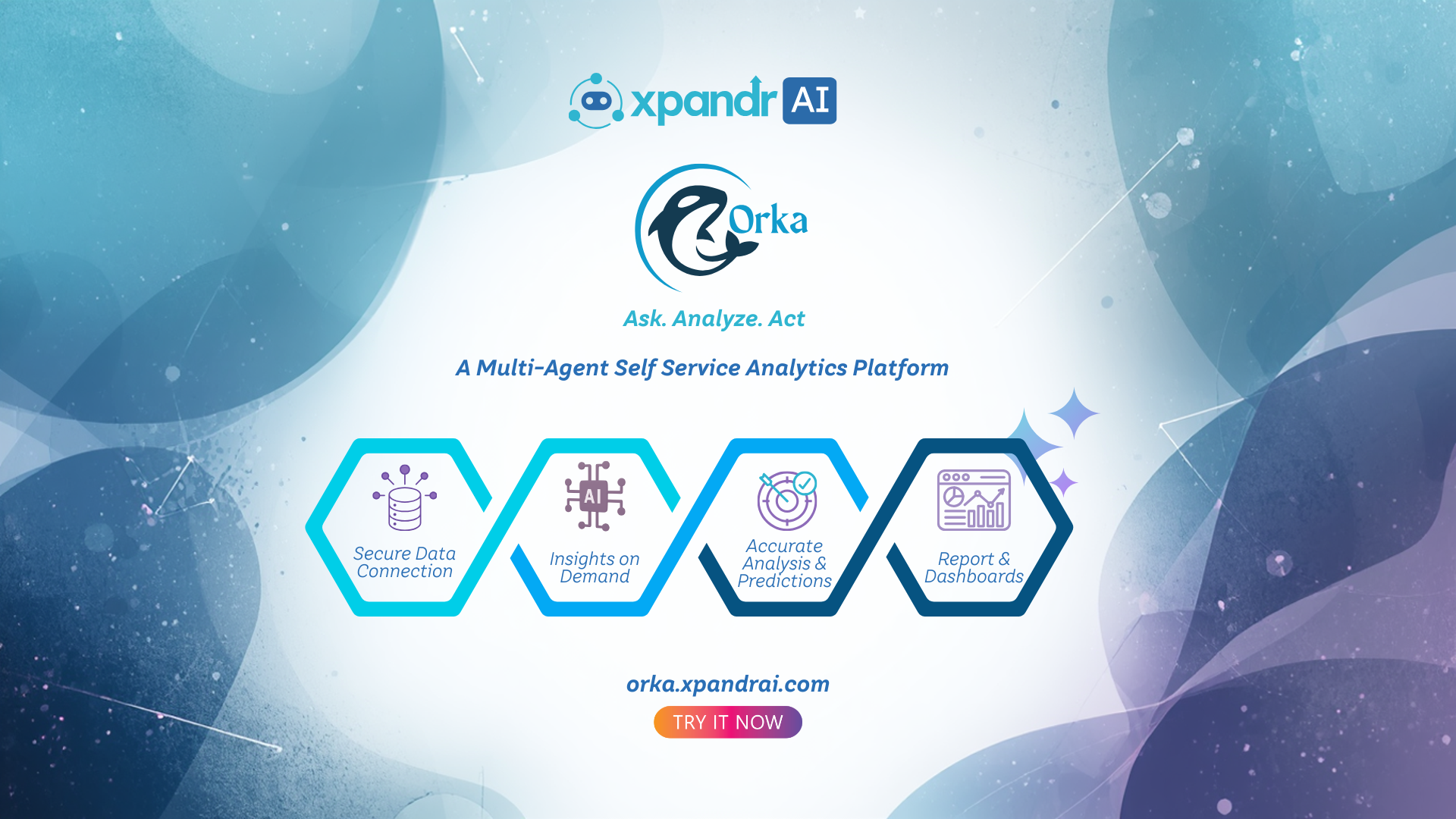
Orka's BI platform seamlessly integrates machine learning capabilities, making advanced analytics accessible to business users. Discover how we transform data into competitive advantage.
Related articles
Orka Business Intelligence Platform: Real-Time Analytics for Data-Driven Decisions
Transforming Business Intelligence with Orka: From Data Chaos to Strategic Clarity
Implementing Business Intelligence with AI: A Complete Guide
About the Author
Venkat D - IIM-A AGMP 2023 - XpandrAI team member with deep expertise in artificial intelligence, business intelligence, and marketing automation. Alumni of IIM Ahmedabad specializing in helping enterprises leverage AI for transformative business outcomes.